Prehliadka

Start With the Tube-Side Duty, Then Choose the Grade
The fastest way to choose a heat exchanger tube grade is to write down the tube-side fluid, the shell-side fluid, the design temperature, the design pressure, the chloride level, the pH, the expected flow velocity, and the cleaning method. If those seven items are missing, grade selection becomes guesswork. A tube that performs well in clean cooling water can fail quickly in brackish water, and a grade that resists chloride pitting may still crack under wet hydrogen sulfide or suffer creep in a fired heater.
For most shell-and-tube exchangers, the practical decision order is: first confirm that the alloy is allowed by the design code and customer specification; second check chloride stress corrosion cracking and pitting resistance; third check temperature limits for oxidation, creep, and phase stability; fourth check erosion, fouling, and cleaning; fifth compare installed life-cycle cost, not price per kilogram. The table below gives a starting matrix, not a final answer. Final selection must use the actual water analysis, operating stress, weld details, and any project-specific standard such as ASTM A213, ASTM A269, ASTM A789, EN 10216-5, or a customer datasheet.
| Grade family | Typical service | Chloride and corrosion note | Indicative temperature window | Main watch point |
|---|---|---|---|---|
| 304 / 304L | Clean cooling water, benign process fluids, general industrial exchangers | Low-chloride service only; poor resistance to chloride pitting and cracking | Down to cryogenic, up to about 400°C in suitable designs | Lowest cost, but the first grade to suffer in brackish or coastal water |
| 316 / 316L | Moderate chloride cooling water, dilute acids, food and pharmaceutical service | Molybdenum improves pitting resistance; not a seawater grade | Up to about 450°C, depending on stress and environment | Chloride cracking still possible above moderate temperature and concentration |
| 321 / 321H | High-temperature process streams, steam, refinery and petrochemical service | Titanium stabilization reduces sensitization in the heat-affected zone | Roughly 450°C to 600°C for stabilized service | Not a chloride-water solution; verify creep and oxidation data |
| 347 / 347H | Steam superheaters, high-temperature hydrocarbon, cyclic thermal service | Niobium stabilization gives good high-temperature stability | Roughly 500°C to 650°C | Welding and stress relief must follow the qualified procedure |
| 904L | Sulfuric and phosphoric acid, chloride-bearing process streams, severe corrosion | High nickel and molybdenum; PREN typically in the mid-30s | Useful to about 400°C in many process duties | Cost and availability; confirm intergranular corrosion resistance |
| 2205 duplex | Chloride cooling water, moderate sour service, high-strength exchangers | PREN around 34; strong resistance to chloride stress cracking | Roughly minus 50°C to 300°C | Avoid excessive cold work and uncontrolled welding; watch 475°C embrittlement |
| 2507 super duplex | Seawater, high-chloride brine, offshore and desalination service | PREN above 40; high strength and good chloride resistance | Roughly minus 50°C to 250°C | Narrower fabrication window; require qualified welding and ferrite control |
| Nickel alloys such as 625, 800, and Monel | Severe acids, high-temperature oxidation, caustic, special process streams | Depends on alloy; some grades resist chlorides and reducing acids much better than stainless | Alloy-dependent; some grades operate above 600°C | Cost, dissimilar-metal welding, and correct heat treatment |
The Four Failure Modes That Decide Most Tube Grades
Grade selection becomes much easier when the discussion shifts from alloy names to failure modes. In heat exchangers, four damage mechanisms account for a large share of premature tube failures. Each one points to a different set of tests, alloying elements, and operating limits.
Chloride pitting and crevice corrosion
Pitting starts at a local break in the passive film, often under deposits, in tube-to-tubesheet crevices, or at low-flow zones. Chloride concentration, oxygen, temperature, and stagnant conditions all increase risk. Molybdenum and nitrogen raise pitting resistance, which is why 316L, 904L, 2205, and 2507 appear in more aggressive water services. The practical check is the pitting resistance equivalent number, or PREN, together with the actual chloride level and wall temperature.
Chloride stress corrosion cracking
Chloride stress cracking can occur in austenitic grades such as 304L and 316L when chloride, tensile stress, and temperature act together. It often appears as branched cracks rather than general wall loss. Duplex and super duplex grades are more resistant because their ferrite-austenite microstructure disrupts crack propagation, but they are not immune. High-nickel alloys may be needed where cracking risk is combined with severe acids or high temperature.
Oxidation, creep, and sensitization
At high temperature, the limiting factor is no longer water chemistry. It is oxide scale stability, creep strength, and phase changes. Stabilized grades such as 321 and 347H, or higher-nickel alloys, are used where service temperature exceeds the comfortable range of 304L or 316L. Sensitization during welding can also reduce corrosion resistance in the heat-affected zone, so carbon control and stabilization matter.
Erosion-corrosion, fouling, and thermal fatigue
High tube-side velocity, suspended solids, steam impingement, and frequent thermal cycling can thin or crack a tube even when the alloy is chemically suitable. Fouling raises tube-wall temperature and creates crevices, which then accelerate pitting. A grade change alone will not solve a flow distribution problem. Tube size, wall thickness, support spacing, and cleaning strategy must be reviewed together.
Grade-by-Grade: Where 304L, 316L, 321, 347H, 904L, Duplex, and Nickel Alloys Fit
304 and 304L: the baseline for clean, low-chloride duty
304L is the default starting point for non-marine cooling water, benign process fluids, and applications where the main requirement is formability, weldability, and cost control. It is not a seawater alloy and should not be used where chlorides concentrate on a hot tube wall. In a heat exchanger, the tube wall can be hotter than the bulk water by 10°C to 30°C or more, especially under fouling. That difference is often enough to turn a borderline chloride case into a cracking case.
316 and 316L: the workhorse for moderate chloride and dilute acids
316L adds molybdenum, which improves pitting resistance and gives more margin in cooling water, food processing, pharmaceutical, and light chemical service. It remains the most common upgrade from 304L. However, 316L is frequently over-specified for benign water and under-specified for brackish water. If the chloride level is rising, the temperature is above roughly 60°C, and deposits are likely, a duplex or super austenitic grade may be more economical over the life of the exchanger. Where 316L is close but not sufficient, TP317L raises molybdenum further and can act as a bridge grade; see the TP317L heat exchanger tube reference for a comparable chemistry route.
321, 321H, 347, and 347H: stabilization for high temperature
Titanium-stabilized 321 and niobium-stabilized 347 are selected when the tube will operate in the creep range or pass through welding and stress relief that could otherwise sensitize the steel. They are common in steam, refinery, petrochemical, and high-temperature process exchangers. Stabilization does not make these grades suitable for chloride water. It addresses chromium carbide precipitation and high-temperature strength, not pitting or stress cracking.
904L and super austenitic grades: severe corrosion with good fabrication
904L is a high-nickel, high-molybdenum austenitic grade used in sulfuric acid, phosphoric acid, chloride-bearing process streams, and other severe corrosion duties. Super austenitic grades such as S31254 offer high PREN and good toughness, but they demand careful welding and heat treatment. These grades are often chosen when duplex is not allowed by the specification, when the operating temperature is too high for duplex, or when a customer standard calls for a fully austenitic microstructure.
Duplex and super duplex: strength plus chloride resistance
2205 duplex and 2507 super duplex offer high yield strength and good resistance to chloride stress cracking. They are common in seawater, brine, offshore, and chemical processing exchangers. The trade-off is a narrower fabrication window. Welding must control ferrite-austenite balance, heat input, and intermetallic precipitation. Duplex tubes should not be soaked in the 300°C to 500°C range for long periods, and 475°C embrittlement is a real concern for some compositions.
Nickel alloys: when stainless steel runs out of margin
Nickel alloys such as 625, 800, and Monel 400 are selected for severe acids, high-temperature oxidation, caustic service, and process streams that attack stainless steels. They are not a universal answer. Each alloy has a specific resistance profile, and dissimilar-metal welding, thermal expansion, and cost must be evaluated together. A useful rule is to move to nickel alloy only after the failure mechanism and the required corrosion allowance have been defined.
 TP316/316L/316H/316Ti Austenitic Stainless Steel PipeReview these molybdenum-bearing austenitic grades for chemical processing, heat exchangers and services needing welded or elevated-temperature performance.View Product →
Temperature Is a Hard Boundary, Not a Marketing Number
Temperature limits quoted in brochures are usually indicative. The real limit depends on stress, atmosphere, cycle frequency, weld condition, and allowable deformation. For example, 304L may be described as suitable to 400°C, but a pressurized tube under cyclic thermal load may need a lower design metal temperature or a stabilized grade. In the creep range, rupture strength and oxidation resistance become more important than room-temperature corrosion data.
The chart is a planning aid, not a design code. It shows why 321H and 347H appear in high-temperature exchangers and why duplex grades are usually not the first choice for hot process streams. It also explains why a heat exchanger that operates at 350°C in a chloride-bearing stream is a much harder selection problem than the same chloride level at 40°C. At high temperature, the tube wall can also oxidize, scale, and lose effective wall thickness. In cyclic service, thermal fatigue may control before creep does.
Two phase-related risks deserve attention. First, austenitic stainless steels can sensitize when heated through the carbide precipitation range, especially after welding or slow cooling. Low-carbon grades and stabilized grades reduce this risk. Second, duplex steels can form sigma phase or other intermetallic phases after prolonged exposure in the 300°C to 500°C range. That reduces toughness and corrosion resistance. The specified heat treatment and the actual service history must be reviewed together.
Water Chemistry and Fouling: The Hidden Grade Selector
Cooling water analysis should include chloride, sulfate, pH, conductivity, dissolved oxygen, silica, iron, manganese, suspended solids, and the expected concentration cycle. A single chloride number is not enough. A cooling tower that cycles three times can turn 80 mg/L chloride into 240 mg/L at the tube wall. A stagnant standby period can allow deposits and under-deposit corrosion even when the circulating water looks acceptable.
Useful screening formula: PREN = %Cr + 3.3 × %Mo + 16 × %N. Higher PREN generally means better pitting resistance in chloride environments, but it does not replace stress corrosion testing, crevice analysis, or service experience.
pH is equally important. Stainless steels rely on a passive oxide film. Very low pH, high temperature, and high chloride can break that film. Very high pH can cause caustic cracking in some alloys. Oxygen is a double-edged condition: it helps rebuild the passive film, but it also drives pitting when chlorides are present. In closed loops, oxygen scavengers and corrosion inhibitors can change the ranking of alloys completely.
Fouling changes the heat transfer surface as well as the corrosion risk. Deposits create crevices, raise tube-wall temperature, and reduce flow. A tube that is rated for 316L in clean water may need 904L or duplex when the same water deposits scale. Cleaning method matters too. High-pressure water jetting, chemical cleaning, and mechanical brushing all impose different risks. A soft grade with a thin wall may be damaged by aggressive cleaning, while a hard duplex tube may resist erosion but be more sensitive to welding defects.
- Low chloride, clean water: 304L or 316L can be technically sound if temperature and flow are controlled.
- Moderate chloride, fouling risk: 316L may be marginal; 904L or 2205 duplex often gives more operating margin.
- Seawater or high-chloride brine: 2507 super duplex or a suitable nickel alloy is usually more appropriate than 316L.
- Acid process stream: check the specific acid, concentration, temperature, and oxidizing/reducing condition before selecting 904L or a nickel alloy.
- High temperature with low chloride: 321H, 347H, or a nickel alloy may be controlled by creep and oxidation rather than corrosion.
Duplex and Super Duplex: High Strength With a Narrower Window
2205 duplex is often the most cost-effective upgrade when 316L is failing by chloride stress cracking or when a higher design pressure allows a thinner wall. Its yield strength is roughly twice that of austenitic stainless steel, which can reduce tube wall thickness and support weight. 2507 super duplex pushes pitting resistance and strength higher, making it a common choice for seawater-cooled exchangers, desalination, and offshore service.
The limitation is fabrication discipline. Duplex tubes must be welded with a qualified procedure that controls heat input, interpass temperature, shielding gas, and ferrite balance. After welding, the heat-affected zone may need post-weld cleaning and, in some cases, a solution anneal. Cold bending and U-bending must avoid excessive deformation. If the tube is severely cold worked, the austenite-ferrite balance can shift, and corrosion resistance may drop.
Do not select duplex only because it is stronger. In a low-chloride, low-temperature exchanger, 316L may be perfectly adequate and easier to weld. In a high-temperature stream above the duplex limit, 321H, 347H, or a nickel alloy may be the correct route. The selection should compare the actual tube-wall temperature, chloride concentration, stress, and welding method. A grade that is excellent in seawater can be a poor choice in a 450°C process stream.
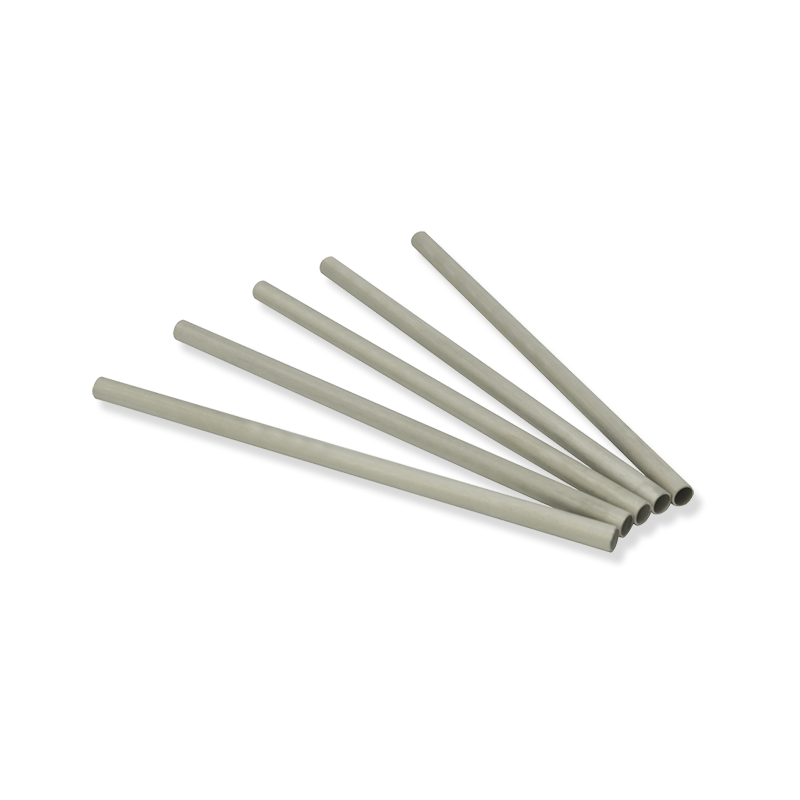 S32750 Super Duplex Steel Seamless PipeReview this cold-drawn super duplex pipe supplied solution annealed, with high strength and pitting resistance for subsea, heat exchanger and offshore applications.View Product →
Nickel Alloys and Super Austenitic Grades for Severe Service
When the process stream contains chlorides plus acids, or when the temperature is too high for duplex, nickel alloys and super austenitic grades become relevant. 904L is widely used in sulfuric and phosphoric acid service and in chloride-bearing process streams where 316L lacks margin. Alloy 625 offers high strength and excellent corrosion resistance in severe environments, while alloy 800 is often selected for high-temperature service. Monel 400 is used in specific reducing environments and hydrofluoric acid service, but it is not a general-purpose upgrade for all acids.
The selection question is not simply "which alloy is more corrosion resistant." It is "which alloy is resistant to the actual failure mechanism at the actual temperature and stress." A high-nickel alloy can suffer different problems, including galling, dissimilar-metal welding issues, and sensitivity to specific contaminants. The purchasing specification should state the environment, the required corrosion allowance, the NDE requirements, and the acceptable heat treatment.
For severe heat exchanger duties, the tube and tubesheet materials should be reviewed together. A corrosion-resistant tube joined to a less resistant tubesheet can still fail at the joint. Welded tube-to-tubesheet joints need a qualified procedure and appropriate filler metal. Expanded joints need the right hardness and surface finish. The tube grade cannot compensate for a poor joint design.
Super austenitic grades such as S31254 offer a middle path between 904L and nickel alloys. They provide high PREN and good toughness, but they require careful welding and may not be available in every size. If the project schedule is tight, confirm mill availability before finalizing the grade. A technically superior alloy that cannot be delivered in the required U-bend configuration is not a practical solution.
Nickel alloy heat exchanger tubing is a useful reference point when the duty moves beyond stainless steel. 904L Austenitic Stainless Steel Alloy PipeReview this high-alloy, low-carbon austenitic pipe with copper and molybdenum additions for reducing acids, crevice corrosion resistance and elevated-temperature service.View Product →
Standard, Size, and Surface Finish: The Specification Details Buyers Miss
Many tube inquiries specify the grade but leave the standard ambiguous. ASTM A213, ASTM A269, ASTM A312, ASTM A789, and EN 10216-5 are not interchangeable. They cover different product forms, testing requirements, tolerances, and intended service. A heat exchanger tube for a fired heater may require A213, while a general-purpose seamless tube may be ordered to A269. A welded or heavily cold-worked tube may fall under a different specification. The purchase order should state the standard, the edition, the grade, the size, the wall thickness, the length, the surface finish, and the inspection requirements.
| Standard | Typical scope | Common heat exchanger use | Watch point |
|---|---|---|---|
| ASTM A213 / A213M | Seamless ferritic and austenitic alloy-steel boiler, superheater, and heat exchanger tubes | High-temperature and pressure service, stabilized grades, U-bend tubes | Check grade coverage, heat treatment, and test requirements |
| ASTM A269 | Seamless and welded austenitic stainless steel tubing for general service | General corrosion-resistant tubing, instrumentation, low-pressure exchangers | Not automatically a substitute for A213 in high-temperature pressure service |
| ASTM A312 | Seamless and welded austenitic stainless steel pipe | Piping and some exchanger shells or headers, not usually the tube bundle | Pipe tolerances and testing differ from tube requirements |
| ASTM A789 / A789M | Seamless and welded ferritic-austenitic stainless steel tubing | Duplex and super duplex heat exchanger tubes | Requires ferrite control, welding qualification, and careful heat treatment |
| ASTM A803 / A803M | Welded ferritic stainless steel boiler and heat exchanger tubes | Ferritic grades in specific high-temperature or corrosion duties | Confirm weld quality and post-weld treatment |
| EN 10216-5 | Seamless steel tubes for pressure purposes, stainless steel | European pressure equipment and PED-related projects | Check delivery condition, testing category, and notified body requirements |
Size and wall thickness are not minor details. A 19.05 mm outside diameter tube with a 2.11 mm wall has a different stiffness, heat transfer area, and fouling response than a 25.4 mm tube. The wall thickness must satisfy pressure design, corrosion allowance, and mechanical cleaning. U-bend tubes need a controlled bend radius, adequate straight length, and stress relief if required. If the exchanger is retubed, the new tube must match the tubesheet hole size, the baffle spacing, and the expansion or welding method.
Surface finish also affects performance. Bright annealed tubing is common for clean service and good corrosion resistance. Pickled and passivated tubing is used where a heat-treatment scale must be removed. Electropolished tubing is selected for high-purity, pharmaceutical, and food service where surface roughness and cleanability matter. A rough surface can hold deposits and initiate crevice corrosion, but an excessively polished surface is not a substitute for the correct alloy.
Inspection and Documents That Reduce Procurement Risk
The most expensive tube is the one that fails during commissioning. A practical inspection plan should be agreed before production, not after shipment. For heat exchanger tubes, the usual checks include dimensional inspection, chemical composition verification, mechanical properties, flattening or flaring tests, hydrostatic or pneumatic testing, eddy current testing, and visual inspection of the bore and outside surface. The exact scope depends on the standard and the criticality of the exchanger.
Material verification
Request product analysis and, where risk is high, positive material identification on finished tubes. Confirm that the heat number on the tube matches the mill certificate and the packing list.
Eddy current testing
Eddy current testing is widely used to detect surface and near-surface defects in austenitic and duplex tubes. The test frequency, probe type, and acceptance criteria must be stated.
Pressure and leak testing
Hydrostatic or pneumatic testing proves pressure integrity, but it does not replace eddy current or ultrasonic inspection for longitudinal defects. Use the test required by the standard and the project specification.
Corrosion and microstructure checks
Intergranular corrosion testing, ferrite content, and microstructure examination may be required for stabilized, duplex, and super austenitic grades. These tests are especially important after welding or hot forming.
U-bend quality
U-bend tubes need controlled ovality, minimum bend radius, and proper heat treatment. Check for wrinkles, cracking, and wall thinning on the bend. The straight leg length must match the exchanger drawing.
Document package
Ask for the mill test certificate, dimensional report, NDE reports, heat treatment records, surface finish report, and packing list. For European pressure equipment, confirm the PED documentation and material traceability.
Third-party inspection is often worthwhile for critical exchangers. The inspector should review the mill certificate, witness the required tests, and verify the tube identification before packing. If the tubes are U-bent or finned, the inspection plan should include the post-bend dimensions and surface condition. A small dimensional error at the tube end can stop the entire retubing job.
Cost Should Be Evaluated as Installed Life-Cycle Cost
Grade selection often stalls because the purchasing team compares price per kilogram while the engineering team compares corrosion resistance. The more useful comparison is installed life-cycle cost: tube price, fabrication, welding, inspection, installation downtime, expected replacement interval, and production loss if the exchanger leaks. A 316L bundle may be cheaper at the quotation stage, but if it fails in three years in brackish cooling water, the replacement cost and downtime can exceed the initial saving many times over.
The cost index is relative and changes with mill product form, size, wall thickness, and market conditions. It is still useful for comparing options at the early design stage. A duplex tube may be more expensive per kilogram than 316L, but its higher strength can allow a thinner wall, which reduces weight and may lower the total bundle cost. A nickel alloy may look expensive until the cost of a shutdown is included.
Lead time is part of cost. A special grade that requires a new heat, a non-standard size, or a long U-bend may add weeks to the project. If the exchanger is on a maintenance critical path, availability can outweigh a small difference in corrosion resistance. The practical approach is to ask for a technical comparison and a delivery comparison at the same time. A grade recommendation that ignores the mill schedule is incomplete.
Common Selection Mistakes and How to Avoid Them
Using 316L as a universal seawater grade
316L is not suitable for continuous seawater service. Chloride pitting and crevice corrosion can start quickly, especially in stagnant or low-flow areas. Use 2507, a suitable super austenitic grade, or a nickel alloy based on the actual seawater chemistry and velocity.
Specifying the grade without the environment
A purchase order that says "316L tubes" but does not state chloride, pH, temperature, pressure, and cleaning method leaves the mill and the designer to guess. The result may be technically compliant but unsuitable for the duty.
Ignoring tube-wall temperature
The tube wall is often hotter than the bulk fluid. In a fouled exchanger, the difference can be significant. Grade limits based on bulk temperature can be unsafe. Use the design metal temperature and the maximum expected wall temperature.
Treating PREN as a complete answer
PREN is a useful screening tool for pitting resistance, but it does not predict stress corrosion cracking, crevice corrosion, erosion, or high-temperature performance. It also does not account for welding effects. Use it with the full environment and failure-mode analysis.
Forgetting the tube-to-tubesheet joint
A corrosion-resistant tube joined to a mismatched tubesheet can fail at the joint. The joint design, filler metal, expansion degree, and post-weld treatment must be compatible with the tube grade.
Buying on price per kilogram alone
The cheapest tube is not the lowest-cost tube if it fails early. Compare the expected life, inspection cost, replacement downtime, and production loss. A modest upgrade in alloy can be the lowest-cost option over the life of the exchanger.
Leaving surface finish and tolerances undefined
Surface roughness, ovality, wall thickness tolerance, and straightness affect installation and corrosion performance. State them clearly, especially for U-bend, bright annealed, or electropolished tubes.
A Practical Inquiry Checklist for Heat Exchanger Tube Orders
A complete inquiry shortens the technical review and reduces the chance of a wrong grade. The following checklist is suitable for a new bundle, a retubing project, or a replacement order.
- Service description: tube-side fluid, shell-side fluid, and any cleaning chemicals.
- Design conditions: design pressure, design temperature, operating temperature, and maximum tube-wall temperature.
- Water chemistry: chloride, pH, conductivity, dissolved oxygen, silica, suspended solids, and cycles of concentration.
- Grade and standard: alloy grade, ASTM or EN standard, edition, and any customer specification.
- Size: outside diameter, wall thickness, tolerance, and length. State whether the tube is straight or U-bent.
- Configuration: U-bend radius, straight leg length, bend orientation, and any finning or special end preparation.
- Surface finish: bright annealed, pickled and passivated, electropolished, or as-rolled.
- Heat treatment: solution anneal, stress relief, or mill finish. State the requirement for U-bend stress relief.
- Inspection: eddy current, hydrostatic, pneumatic, PMI, intergranular corrosion, ferrite content, and third-party witness.
- Documents: mill test certificate, NDE reports, heat treatment records, PED documentation, and packing list.
- Packing and transport: end caps, wooden cases, rust prevention, and moisture protection for sea freight.
- Delivery: required date, acceptable mill lead time, and any partial shipment requirement.
When these items are supplied together, the grade recommendation can be specific. When they are missing, the only safe recommendation is to ask for more data. A heat exchanger tube is a pressure boundary and a heat transfer surface at the same time. It deserves a selection process that reflects both roles.
FAQ
Is 316L always better than 304L for heat exchangers?
No. 316L is better in moderate chloride and dilute acid service, but 304L can be the more economical and technically correct choice for clean, low-chloride water. The decision depends on the actual water chemistry, temperature, and cleaning method. Using 316L as a default without checking the environment can still lead to chloride cracking.
When should I choose duplex instead of 316L?
Consider duplex when 316L is at risk of chloride stress corrosion cracking, when higher strength allows a thinner wall, or when the chloride level is beyond the comfortable range of austenitic stainless steel. 2205 is common for moderate chloride cooling water, while 2507 is used for seawater and high-chloride brine. Check the temperature limit and welding requirements before finalizing the grade.
Can 304L or 316L be used in seawater?
They are generally not suitable for continuous seawater service. Seawater contains chlorides and biological activity that create pitting and crevice corrosion risk, especially at low flow or in stagnant zones. Super duplex, super austenitic, or nickel alloys are more appropriate, and the final choice should be based on velocity, fouling, and allowable maintenance.
What is the difference between ASTM A213 and ASTM A269?
A213 covers seamless ferritic and austenitic alloy-steel boiler, superheater, and heat exchanger tubes, with requirements aimed at high-temperature and pressure service. A269 covers austenitic stainless steel tubing for general service. They are not interchangeable. The purchase order should state the standard that matches the design code and the service.
Why is the tube-wall temperature higher than the fluid temperature?
Heat flows through the tube wall, and fouling adds thermal resistance. In a fouled exchanger, the metal temperature can be significantly higher than the bulk fluid temperature. That matters because chloride cracking, oxidation, and creep all depend on metal temperature, not just the fluid temperature in the pipe.
Do U-bend tubes need stress relief?
It depends on the grade, bend radius, wall thickness, and standard. Cold-worked U-bends can retain residual stress, which increases the risk of stress corrosion cracking in some environments. The project specification should state whether stress relief is required and how it will be verified.
What documents should accompany a heat exchanger tube order?
Ask for the mill test certificate with heat number traceability, dimensional inspection report, NDE reports, heat treatment records, and surface finish report. For pressure equipment in Europe, confirm PED documentation. If third-party inspection is required, include the inspection release before shipment.
How do I compare grade options when the budget is tight?
Compare installed life-cycle cost rather than price per kilogram. Include the expected replacement interval, inspection cost, downtime, and production loss. A higher-grade tube can be the lower-cost option if it avoids an early failure. At the same time, do not upgrade without a defined failure mechanism, because the more expensive alloy may not solve a flow, fouling, or welding problem.